
The Clergy Tax Deduction That Survived TCJA (And Most Pastors Don't Know About)
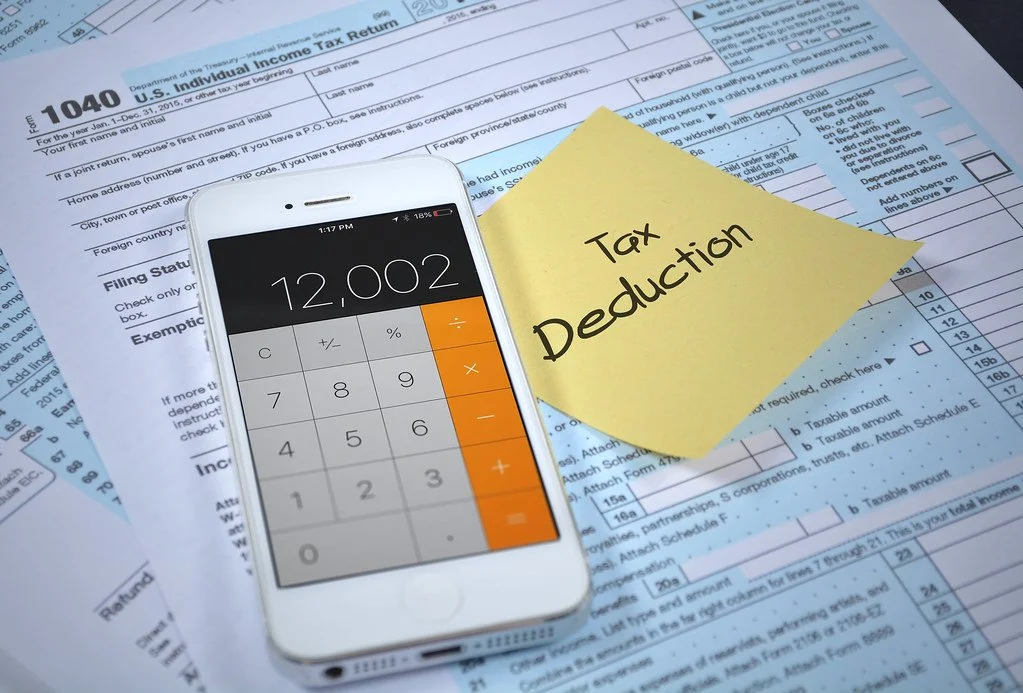
You just finished another hospital visit—30 miles round-trip. You attended a continuing education conference and bought two commentaries that'll shape your sermon series for the next year. Maybe you subscribe to a journal or two, pay annual denominational dues, or keep a dedicated phone line for pastoral emergencies. These expenses add up. And if you're like most pastors, you've assumed they're simply non-deductible since the Tax Cuts and Jobs Act eliminated unreimbursed employee expenses back in 2018.
Here's what nobody told you: those expenses can still reduce your taxes. Not your income tax, but your self-employment (SECA) tax—that 15.3% bite that hits ministers uniquely hard. This isn't a loophole or aggressive tax position. It's been IRS-sanctioned policy since 1980, and it survives to this day.
Why ministers have a tax status unlike anyone else
Ministers occupy a genuinely peculiar position in the tax code. You're typically an employee of your church—receiving a W-2, working at the direction of your board or elders, having your salary voted on annually. But for Social Security and Medicare purposes, the IRS treats you as self-employed. This "dual status" means you pay SECA tax (15.3%) instead of having FICA split between you and your employer (though many churches pay their half voluntarily).
This dual status creates both a burden and an opportunity. The burden: you pay the full 15.3% yourself. The opportunity: because you're treated as self-employed for SECA purposes, you can reduce your SECA taxable income by subtracting business expenses—even when you can't deduct those same expenses for income tax purposes.
Revenue Ruling 80-110 established this principle back in 1980. A minister incurred $500 in unreimbursed business expenses. The IRS concluded that while these expenses couldn't reduce adjusted gross income for income tax purposes, they absolutely could be "deductible on Schedule SE...in computing the minister's self-employment tax."
When TCJA eliminated miscellaneous itemized deductions in 2017, many pastors (and their CPAs) assumed this strategy died too. It didn't. The TCJA changed Section 67(g) affecting income tax calculations—it left Section 1402(a) governing SECA calculations completely untouched.
IRS Publication 517 (2024 edition) confirms this explicitly: "Subtract any allowable expenses from those wages, include the net amount on line 2 of Schedule SE (Form 1040), and attach an explanation."
But here's why this gets systematically missed: Think about how self-employment tax normally works. If you run a business or do freelance work, you fill out Schedule C first. Schedule C walks you through income and expenses line by line, prompting you to categorize costs. Your net profit from Schedule C then flows to Schedule SE for self-employment tax calculation. The expense deduction happens naturally within the form flow.
Ministers don't fill out Schedule C for their church wages—you're employees receiving W-2s. But those W-2 wages are subject to SE tax, so they go directly to Schedule SE. There's no Schedule C in between. There's no form asking about expenses. You have to know to manually adjust Schedule SE line 2 and attach an explanation.
As far as I can determine, ministers are the only class of worker who have income subject to self-employment tax that doesn't flow through Schedule C. Everyone else gets prompted by form design. Ministers must remember this adjustment exists. This form design reality explains why even good CPAs miss this deduction—they're following the standard form logic, which doesn't naturally accommodate this unique ministerial situation.
How the numbers actually work
Let's make this concrete. Suppose you had $4,000 in unreimbursed ministry expenses this year—mileage to hospital visits, books, conference registration, professional dues, and office supplies.
For income tax purposes: You can't deduct a penny. TCJA eliminated that option through 2025.
For SECA purposes: You subtract that $4,000 from your ministerial income before calculating self-employment tax. At the effective SECA rate (15.3% applied to 92.35% of net earnings), that's roughly $564 in real tax savings.
Here's how the math works: For every $100 of unreimbursed ministry expenses, you could save approximately $14.13 in SECA taxes as a minister.
These aren't theoretical numbers. They're dollars that stay in your pocket rather than going to the IRS—dollars the tax code explicitly allows you to keep.
Which expenses qualify for the deduction
The standard applies: expenses must be ordinary and necessary for your ministry. Qualifying expenses typically include ministerial travel mileage (67 cents per mile for 2024, irs 70 cents for 2025), continuing education and conferences, professional books, commentaries, and subscriptions, denominational dues and credentialing fees, vestments and religious attire (including cleaning), and dedicated ministry supplies and equipment.
Documentation matters. Keep contemporaneous mileage logs, receipts for purchases over $25, and records connecting each expense to your ministerial duties. The IRS rarely audits this particular deduction, but if questions arise, solid records resolve them quickly.
The housing allowance allocation question
If you receive a housing allowance (and you should), there's an important distinction to understand. The Deason Rule requires you to allocate expenses proportionally between your taxable income and tax-free housing when calculating income tax. However—and this is critical—Publication 517 states clearly: "Reduce your otherwise deductible expenses only in figuring your income tax, not your SE tax."
For SECA purposes, you deduct the full amount of qualifying expenses without any allocation. This is one of the few places where the Deason rule doesn't apply, and many preparers get this wrong.
Exactly how to claim this deduction
The mechanics require attention to detail but aren't complicated.
Step 1: Calculate your ministerial SECA income. This includes your W-2 wages (box 1), plus your housing allowance (whether designated or fair rental value of a parsonage), plus any 1099 income from weddings, funerals, or speaking fees.
Step 2: Subtract your unreimbursed ministry expenses. Keep a detailed calculation showing each expense category.
Step 3: Enter the net amount on Schedule SE, Line 2. Don't use Schedule C for your W-2 wages—that's specifically for self-employment income like wedding fees. Your church employee wages go directly to Line 2, reduced by expenses.
Step 4: Attach an explanation statement. This is required. Your statement must include a list of taxable ministerial income by source, a list of tax-free income (housing allowance), an itemized list of deductible expenses, your allocation calculation (even though it doesn't affect SECA, the IRS wants to see you've considered it), and a statement that your other deductions aren't allocable to tax-free income.
A critical software warning: TurboTax Online cannot handle this adjustment, to my knowledge. The reason has to do with form design: most self-employed people take expenses on Schedule C, which then flows automatically to Schedule SE. But ministers' W-2 wages go directly to Schedule SE without passing through Schedule C, creating a unique situation where you need to manually adjust Schedule SE before it calculates your tax.
You'll need either TurboTax Desktop (where you can access Forms Mode and the "Schedule SE Adjustments Worksheet"), another desktop tax program, or a qualified preparer. The adjustment goes on the worksheet at line 5c ("Clergy Unreimbursed Business Expenses"). Even professional tax software requires manual override for this—it's not a limitation of consumer software, it's inherent to how ministerial taxation works outside the normal form flow.
What to tell your tax preparer
Many CPAs—even excellent ones—don't handle clergy returns regularly. If you're working with a preparer, come prepared.
Ask these qualifying questions: "Is a minister an employee or self-employed for Social Security purposes?" (Correct answer: self-employed.) "Are you familiar with the Deason allocation rule?" "Can ministers still deduct unreimbursed expenses for SECA purposes after TCJA?" If your preparer hesitates on any of these, consider finding someone with clergy tax experience.
Bring these materials: Your W-2 and any 1099s, your written housing allowance designation from the church board, a detailed list of unreimbursed ministry expenses with receipts, your mileage log, and—if necessary—a printed copy of IRS Publication 517 with the relevant passages highlighted.
The direct quote to share: Per Schedule SE Instructions: "If you were a duly ordained minister who was an employee of a church and you must pay SE tax, the unreimbursed business expenses that you incurred as a church employee are not deductible as an itemized deduction for income tax purposes. However, when figuring SE tax, subtract on line 2 the allowable expenses from your self-employment earnings and attach an explanation."
What could go wrong
Common mistakes to avoid: Applying the Deason allocation to SECA calculations (don't—it only applies to income tax), forgetting to attach the explanation statement, using tax software that doesn't support this adjustment, and failing to include the housing allowance when calculating total ministerial income for SECA purposes.
When to be conservative: Home office deductions have strict requirements and add complexity. Cell phone expenses require separating personal from business use. If an expense feels more personal than ministerial, leave it out. The modest additional savings aren't worth the hassle if the IRS disagrees with your characterization.
This strategy has 45 years of IRS precedent behind it. It's explicitly authorized in current IRS publications. It's not aggressive tax planning—it's simply using a provision that was designed for ministers and remains available.
The better long-term solution
While this SECA deduction provides real savings, it's actually the second-best option. The ideal arrangement is having your church establish an accountable reimbursement plan that covers your ministry expenses directly. Aplos Under such a plan, the church reimburses your documented expenses tax-free, you have no expenses to deduct (because you've been made whole), and the church can budget for these costs without increasing your taxable income.
If your church doesn't currently have such a plan, that's a conversation worth having with your board. But until that happens—or for expenses that fall outside what your church covers—the SECA deduction remains a legitimate way to reduce your tax burden.
Taking the next step
If you've been paying more SECA tax than necessary simply because you didn't know this option existed, you're not alone. Most pastors don't know. Many CPAs don't know. But now you do.
For those who want to ensure they're getting every legitimate deduction, our Tax Review service provides a comprehensive look at your return with clergy-specific expertise. And for pastors who want to truly understand ministerial taxation, our Tax Mastery Training covers everything from housing allowance optimization to estimated payment strategies—including this SECA deduction and dozens of other provisions unique to ministers. You can see more details about our tax services here.
The tax code treats clergy differently. Understanding those differences isn't just about saving money—it's about stewarding the resources God has provided.